
Table of Contents
Expanded Polystyrene Foam or EPS foam
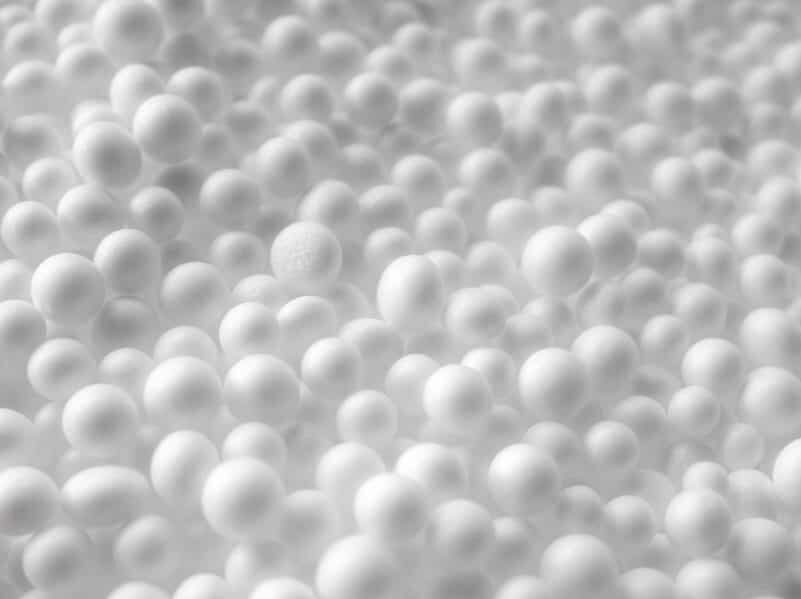
Get to knowExpanded Polystyrene Foam (EPS) or EPS foam. This material is made by fusing closed-cell foam beads with heat from steam. Expanded Polystyrene Foam consists of 98% air and only 2% Polystyrene (PS) plastic. The fused cell walls provide support and distribute applied loads. Thus, despite its light weight, Expanded Polystyrene Foam maintains its shape well, offering structural load-bearing and thermal insulation properties. Thanks to these physical attributes and standout qualities, it is produced in diverse forms to suit various applications: foam beads, foam sheets, foam blocks, foambox, foam packaging, molded foam, protective packaging foam, and construction foam.


- EPS foam (eps foam) is PS foam that uses Pentane gas (C5H12) as an expanding agent. When exposed to heat from steam, it expands into white foam beads. It is then molded in 2 ways: shape-molded into custom shapes using molds, or block-molded into rectangular foam blocks before being cut into foam sheets according to the required thickness.
- PSP foam is PS resin processed through a heated extrusion screw. While the plastic melts, Butane gas (C4H10) is injected, expanding the Polystyrene by approximately 20 times. It is then extruded into sheets, rolled like paper, and thermoformed into foamboxes or food trays.
***Butane gas (C4H10) and Pentane gas (C5H12) belong to the same hydrocarbon family as LPG cooking gas.
More Information
https://omnexus.specialchem.com/selection-guide/expanded-polystyrene-eps-foam-insulation
What is the foam production process?
1. Expanded Polystyrene Foam (EPS) It uses pentane gas (C5H12), which belongs to the same family as LPG, as a blowing agent introduced during the raw material production process known as polymerization. The Polystyrene (PS) plastic traps pentane gas inside the raw resin beads. When producing Expanded Polystyrene Foam from these beads, steam heat is applied to the raw material (Pre-expanded Polystyrene) until it expands into white foam beads. These foam beads are then molded in a mold using steam heat again, fusing together into blocks or molded shapes, ready for further fabrication or application.
Molding, which consists of 2 types:
1.1 Shape Molding: molded into various custom shapes according to the mold design, such as ice boxes and packaging.
1.2 Block Molding: molded into large rectangular blocks and cut to the desired dimensions and shapes.
Generally, EPS foam expands approximately 50 times. Once expanded, air takes up to 98% of its volume, with only 2% being PS plastic. This is why foam is large in size yet lightweight. This unique characteristic enables EPS foam to absorb shocks effectively, making it ideal for packaging, as well as bearing and transferring vertical loads without deforming—allowing it to be used as road embankment fill to prevent road subsidence, and as thermal insulation since the 98% trapped air functions as an excellent insulator.

2. Paper / PSPis PS foam that uses LPG or Butane (C4H10) as an expanding agent. The raw material is standard PS plastic resin fed into an electric heated screw extruder (Screw Extrusion), similar to general plastic extrusion. When the PS resin passes through the heated screw and melts, Butane gas (C4H10), the same LPG gas used in households, is injected at the end of the screw to react with the molten plastic, expanding it by approximately 20 times. It is extruded into sheets and rolled up like paper rolls (hence called Polystyrene Paper / PSP). The PSP foam roll is then thermoformed into various shapes using heat molds, such as food containers or trays.
Why doesn't foam use CFCs?
PS foam, both EPS and PSP, consists of 95–98% air, while the remaining 2–5% is polystyrene plastic, a hydrocarbon compound. CFCs (Chlorofluorocarbons) are compounds of chlorine, fluorine, and carbon, structurally different from the polystyrene that makes up the foam. Because CFCs have a low boiling point, they are difficult to retain in the raw material beads. EPS foam has therefore never used CFCs in its manufacturing process since Germany's BASF first produced EPS foam in 1952. The expanding agent used for EPS foam is pentane gas, which contains no chlorine.
PSP foam initially used CFCs, but over the past two decades, CFC usage has been phased down in both the plastics and refrigeration industries. PSP foam manufacturers switched to butane gas about 15 years ago. Butane gas is the same cooking gas used in households today. Thus, the blowing agents used in foam today are pentane gas and LPG cooking gas. Both gases are hydrocarbons, just like polystyrene plastic, belonging to the same family as methane, ethane, and propane.

What are the benefits and uses of post-consumer foam?
In addition to standard recycling processes, used EPS foam can be managed in the following ways:
- Mixed with soil for planting: crushed EPS foam loosens the soil, and the air trapped inside benefits plant root systems.
- Mixed with concrete for construction: thanks to its insulating and lightweight properties, mixing crushed EPS foam into concrete reduces material weight and maintains building temperatures. Incineration for energy recovery: because EPS foam consists mostly of air, incinerating crushed foam at temperatures around 1000 °C produces no environmentally harmful substances without requiring additional fuel. Incinerating 1 kg of EPS foam yields energy equivalent to 1.2–1.4 liters of oil.
Foam recycling
Because both EPS and PSP foam are made from polystyrene, which is a thermoplastic, both EPS and PSP can be recycled back into polystyrene plastic.
The recycling process for both foam types begins by crushing foam scraps into smaller pieces, which are then melted or compacted. Melting is performed using a heated screw extruder (Screw Extrusion) operating above the melting point. Compaction is done with agglomeration blades utilizing pressure and friction heat at temperatures below the melting point of the plastic.
Recycled PS plastic can be used to manufacture general plastic products such as cassette cases, videotape reels, rulers, pencil cases, and coasters. In addition, crushed EPS foam scrap can be blended with virgin beads to produce new foam again.

The state of PS foam recycling
PS foam recycling in Thailand is similar to general plastics recycling. EPS and PSP foam manufacturers possess internal recycling capabilities to reintroduce scraps into production to lower material costs and manage industrial waste. The average waste rate in EPS foam production is no more than 5%, representing about 125 tons per month. The waste rate in PSP foam production averages no more than 20% (due to different manufacturing methods), amounting to about 300 tons of monthly waste.
Apart from manufacturers' in-house recycling, scrap buyers also purchase factory waste foam to recycle into low-grade PS plastic.
In the past, public collection for PS foam recycling was limited because the general public lacked accurate understanding of PS foam, leading to negative perceptions—particularly the misconception that foam is non-recyclable. Furthermore, collecting EPS foam, which is bulky yet lightweight, incurs higher transportation costs compared to other plastics.
Today, the industry group actively promotes accurate facts and understanding. Foam compactors have also been developed to densify collected foam, increasing weight and lowering transport costs from collection points to recycling plants, steadily improving foam recovery and recycling volumes.
The PS foam industry in Thailand
The PS foam industry in Thailand began over 50 years ago, starting with the block molding of EPS foam for cold storage panels. As domestic industry expanded, EPS packaging for electrical appliances and electronic exports emerged around 1977. Later on, EPS foam found applications in building construction, bridge abutments, and road embankments.
Currently, there are 5 domestic EPS raw material producers and around 25 EPS foam manufacturers, mostly located in Bangkok and its vicinity, with a total production capacity of approximately 2800–3000 tons per month.
Most manufactured EPS foam is primarily used as packaging for export electrical appliances and electronics. In addition, foambox made from EPS foam are also used for packaging frozen seafood for export.
PSP foam emerged about 15 years ago, with 5 raw material (PS resin) producers and 10 PSP foam manufacturers, all but one located in Bangkok. Current total production capacity is around 1300–1500 tons per month. PSP foam is primarily made into food trays or foamboxes, with exports accounting for about 30%.


